
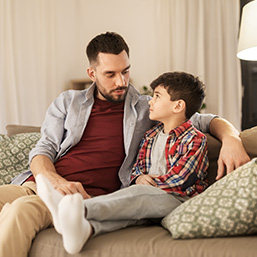
We all want to know what happens during our child’s school day; who they played with, what they learned, and how they felt. But for many parents, asking, "How was school today?” often leads to the same familiar (and often frustrating) one-word response: “Good.”
We have to remember that it's not that our children don't want to talk to us, they often just need a little help knowing how to share certain information, what to say, and when to say it. School is a really busy place for children – their emotions are up and down, it's full of social interactions, different challenges to navigate, and constant learning. By the time they get home, children are often tired or in “decompression mode,” making it harder for them to answer all of your questions about their day.
The good news is that with a few thoughtful strategies, we can help our children open up more naturally and create family routines that make talking about school more enjoyable, and not feel forced.
Pick your moment: Most parents start asking about school the second their child walks through the door or hops in the car. But remember, this is when their brains need time to rest before they can reflect. Imagine getting off a long online meeting and immediately being asked a bunch of questions about your day. You would probably need at least a drink of water or a washroom break before you would be ready to talk. The same principle applies for our kids!
Try to pay close attention to your child’s emotional state. Sometimes, a child's ability to engage isn’t about willingness, it’s about regulation. If they are feeling tired, hungry, or overstimulated, even simple questions can feel hard to answer. Before trying to talk, check in to see where your child is at. If they seem cranky or withdrawn, focus on meeting their needs first; a snack, cuddle, or even some quiet time. When a child’s needs are met, their brains are better able to reflect and communicate. Instead of asking questions as soon as they hop in the car, try:
What do I say? Now that we have changed the timing of our conversations, let's tackle what type of questions to ask. Instead of broad questions like, “How was school?” try asking questions that are:
It’s also helpful to remember that children communicate best when they feel connected first. So, instead of diving into questions, start with something that builds connection. This can look like offering them a hug, sitting beside them, engaging in a fun activity together like coloring, or playing a simple game.
Talking while doing something takes the pressure off and helps children open up without feeling like they’re being interviewed.
If you have younger children or children who struggle to express themselves verbally, you can also use visual tools to get the conversation going. For example, emotion cards or pictures that help them identify how they felt at school that day can be helpful, or asking your child to draw something that happened at school and chatting about it. You can also try having a school journal where both of you write or draw one thing about the day to share before bedtime.
The goal isn’t to get a full play-by-play of your child’s day – it's to build trust and connection over time. Some days, your child may be chatty and full of stories; other days, they may just need your quiet presence. What matters most is that they feel you’re there and ready to listen when they’re ready to talk. Remember, the more your child feels heard and understood, the more likely they’ll be to open up again next time and those school stories will begin to flow.
Ashlee and Lisa are child psychologists who created KidsConnect Psychology as a place for children and families to access tools, supports, and therapy. Check out our website for digital downloads, parenting tool kits, information about our parent counselling, school consultations, daycare consultations and more! kidsconnectpsychology.com. Follow us on Facebook and Instagram at KidsConnect Psychology.
See our related articles:




Calgary’s Child Magazine © 2026 Calgary’s Child